Culture in Nuuk is made and shared by people. Begin with the name of an artist, a particular work or the institution presenting it. That small shift makes a cultural visit more attentive: a façade becomes a building with a purpose, and an artwork becomes something to encounter through its own context.
Katuaq as a meeting place
Katuaq’s own introduction describes a place for exhibitions, cinema, cultural events and its café. Check its current program when you plan a visit. A film, an exhibition and an evening event may offer very different ways to spend time in the same building.

Private Transfer from Nuuk Cruise Port to Nuuk City Hotels
Book your Private Transfer from Nuuk Cruise Port to Nuuk city hotels or any address. Don't go through all the hassle of waiting in a long taxi or sh...

Private Transfer from Nuuk City Hotels to Nuuk Cruise Port
Book your Private Transfer from Nuuk city hotels to Nuuk Cruise Port. Don't go through all the hassle of waiting in...

Private Transfer from Nuuk Cruise Port to Nuuk Airport (GOH)
Book your Private Transfer from Nuuk Cruise Port to Nuuk Airport (GOH). Don't go through all the hassle of waiting...

Private Transfer from Nuuk Airport (GOH) to Nuuk Cruise Port
Book your Private Transfer from Nuuk Airport (GOH) to Nuuk Cruise Port. Don't go through all the hassle of waiting...
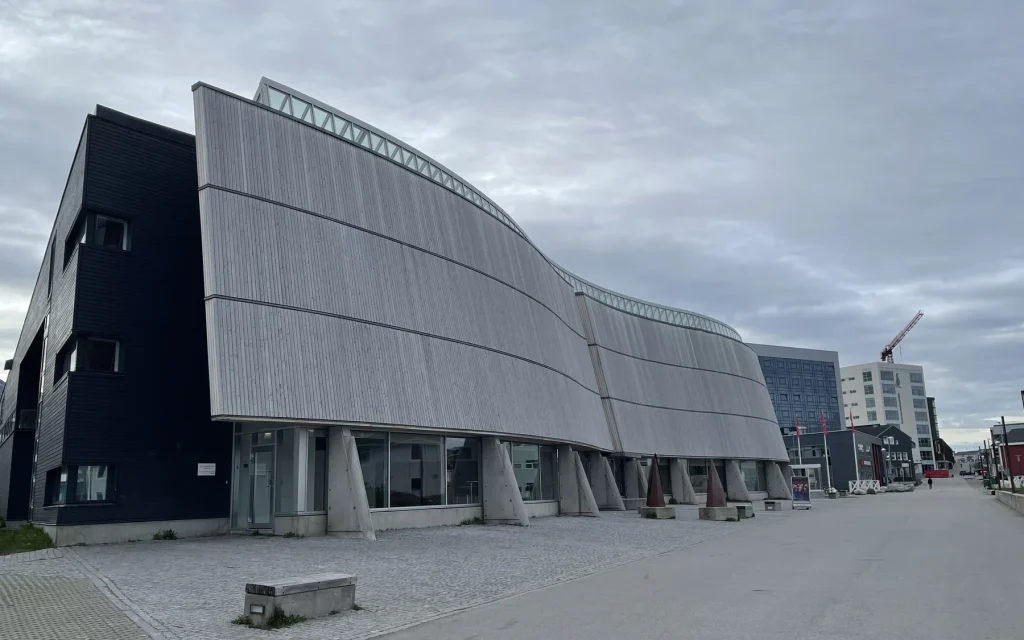
The architects, Schmidt Hammer Lassen, describe the relationship between the cultural centre’s form and Greenland’s light and landscape. Their project account records its completion in 1997 and explains the undulating screen around the building. The photograph here shows the exterior in July 2023, including the weathered material you can see in that particular view.
Read the names beside the work
The same architectural account credits specific artistic contributions. It identifies Aka Høegh’s stage curtain in the Hans Lynge Hall and Buuti Pedersen’s work about the Sun and the Moon above reception. These names are useful beginnings for further reading and for noticing how art participates in a public building.
Take the time to read the credits and interpretation available for the work you encounter. Materials, titles and an artist’s own words can change the way you understand a room. When a work has cultural or historical references that are unfamiliar to you, start with the interpretation supplied by its makers or custodians.
A museum visit has its own focus
Visit Nuuk’s profile of Nuuk Art Museum describes permanent works and changing exhibitions by Greenlandic and international artists. It also explains the collection’s origins in the gift of Svend Junge and Helene Junge Pedersen. The museum’s own website is the place to check its current exhibitions and visitor information.
Choose a question to take into a collection. You might follow a material, compare how different artists represent a place, or spend time with one work and its accompanying text. A focused question can make a visit rewarding without needing to see every object with equal intensity.
| Interest | Useful thing to check |
|---|---|
| A particular artist or exhibition | The institution’s current program and exhibition dates |
| A performance or film | Language, access information and the specific ticket conditions |
| Architecture and public art | Credits, interpretation and access to the space that contains the work |
Be an attentive guest
Follow each venue’s photography guidance and ask before making an identifiable portrait of someone. A cultural visit is also an opportunity to listen. Staff, artists and other visitors may be using the space for their own reasons, so allow those uses room alongside your visit.
Keep the names you learn and the sources you find. Returning to an artist’s work after a trip can deepen an encounter that began with a building, a label or a short conversation. For the rest of your day, our city life guide helps connect cultural visits with the surrounding streets.